


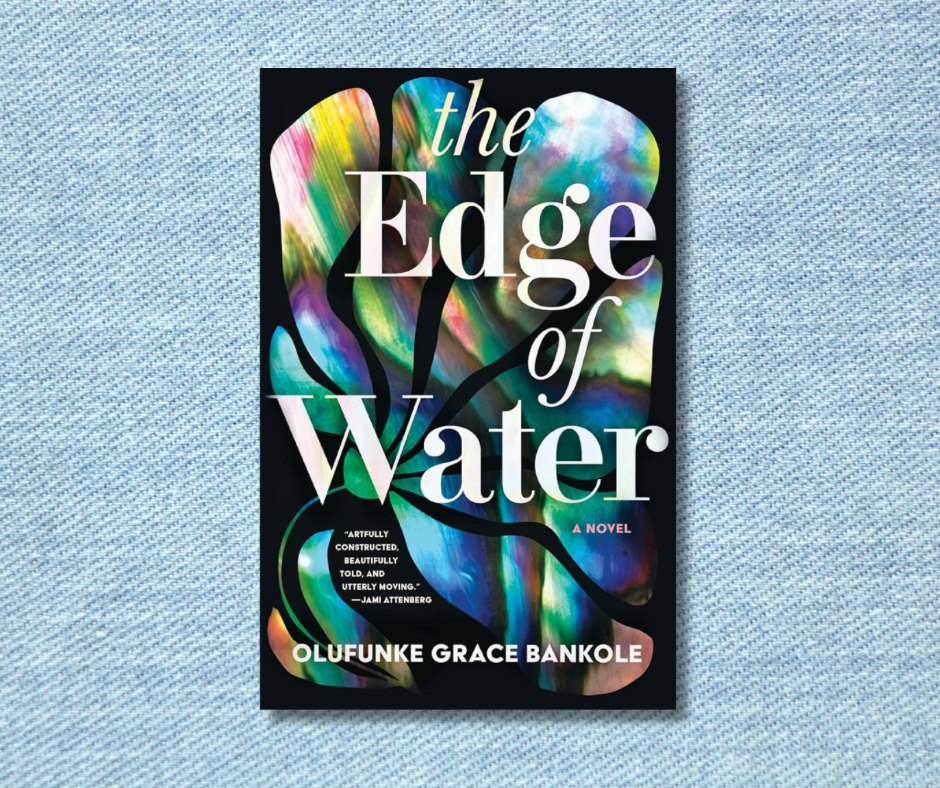
I read The Edge of Water because someone on the internet insisted. Something about the book being the most intimate and refreshing book they’d read in a long while. I hadn’t read any reviews or seen the book in any awards list but I made a mental note to add it to my reading list. By the time I picked it up to read some weeks later, I was not expecting any surprises, I was not expecting at all to be undone. I was, thoroughly. Therefore, I have to begin with a confession.
I came to The Edge of Water as a man, which is to say, I came to it with the luxury of distance. I wanted or expected just a story, just another refreshing read. I found instead, an indictment. It was delivered so quietly and intimately, and as a result, so brutally, when it was done with. It felt very close, like a sister retelling an ordeal to a brother or a lover, someone who would listen. The tenderness, and yet the urgency, made you listen. And having listened, although I cannot say now that I know or understand, I can quietly whisper that I do, a little. Enough to wish, in the proverbial way that a shameful person (even by association) does, that the ground would open and swallow me in it.
Olufunke Grace Bankole’s debut novel follows three generations of women; Esther, her daughter Amina, and Amina’s daughter Laila. From Ibadan to New Orleans, the story follows a piercing weave of love and betrayal, immigration and displacement; arriving finally at the rampaging tragedy of Hurricane Katrina and the long grief that came with it. Esther’s ‘Mummy’ features prominently too, especially in the context of this review, because it was during her own time that the injustice went completely unchallenged.
What arrests me, the source of my jitteriness even weeks after turning the final page, is not the elegance of the structure, nor the lushness of the prose, both are extraordinary in any case. It’s simply the weight of what the women in this book are asked to carry and how ordinary that weight is made to seem.

A moment very early in the novel sets this tone. Fifteen-year-old Esther is lured into a stranger’s, (her would-be-husband’s) car, under the pretense of going to fetch Joseph, the boy she’s actually in love with. When the car ends up at a location different from the one originally planned and she realizes the danger, she reaches for the door handle to make the only move she could have made then; run. But the thought of her survival options in a world which could hold something deadlier than a rapist in the dark, resigns her to submission. He rapes her. And then, because patriarchy does not stop at humiliating women in the dark but has to bring the evil out in the open for it to be complete, he takes his parents to meet Esther’s mother and announce that he has found the girl he wants to marry. Like a conqueror, his story is what holds water and what must be heard and adhered to. Esther, the conquered, cannot tell hers.
Bankole does not authorialize, because she doesn’t need to. She simply shows us the machinery at play: the assembled families, talking unity and shame instead of justice, the mother’s pinching hand beneath the table, an attempt to reign her in, the choice which is really no choice but a trap.
“Because I wasn’t supposed to be at the party in the first place, because Sani had been the one to tell the story, because I was a girl, I would have to do whatever my mother said.”
And what the mother says is what the mother has to say, we don’t find out if it’s what she wants to say. This method, the author not desiring the reader’s outrage, or waiting for it, but just plodding on smoothly like nothing happened, is what makes the book more unnerving.
I am a man who believed I was paying attention, that I was somehow aware, turns out I was not paying enough attention. That is what Bankole’s novel forced me to reckon with.
What patriarchy does, so casually and dismissively, and this is its oldest trick, is that it makes its violence look like the natural order of things. Sani does not see himself as a criminal but as a man who did what men do, and then did the ‘honorable’ thing afterward. Later, when Esther confronts him, he presses his finger to her chest and says, “The truth is I think you would make a good wife for me.” This is his answer to a rape, the answer he’s so sure would suffice. His language is one that totally absolves him, is so fluent, so culturally endorsed, that even Esther’s own mother speaks it.
One of Bankole’s great achievements is that she refuses to let any single institution bear all the blame. The church fails these women, so does culture. The oracle too, which only warns but fails to protect, knowing how powerless they are in the world that it helped to define. America too, that promised land, fails Amina most spectacularly of all. It fails her through the banal, nerve-tingling, bureaucratic indifference which is its own kind of violence. She’s classified as “Unaccounted for,” after a storm she experienced the same with everybody else. Once again, her story, her very life, her efforts in crossing an ocean on a lottery ticket, her hard work, her mothering and dreaming, all could not qualify her to be seen. She was simply a misplaced file.
Amina is the novel’s great heart. She arrives in New Orleans with the ambitions of someone who has been dreaming in a language bigger than the one available to her. She came to America wanting the American dream; education, owning her own business, wanting just …more. This, her wanting more, her refusing to be defined by a world that expected her to make do, was a judgement that hung over her and earns her nothing but suspicion from both the culture she left and the one she entered. “I just wish you became more,” Esther once tells her, and yet every structure around Amina conspires to prevent exactly that. Rashid shuts down the talk of university with a theatrical bout of coughing, simply refusing to hear her. George gets her pregnant her and disappears into thin American air. The French Market stall that should be indifferent in the everybody-is-all-the-same way, hungers her into submission. And all these before the storm comes and sweeps away any refuge she had left.
Through the dome sequences, I trudged along with the story, sober, almost cowering from the weight of the soft scolding, feeling a devastation that felt utterly useless. Amina’s death is caused by negligence, the kind of negligence that the violence of racism breeds and whose effects are double on the black woman.
Bankole does not authorialize here either, she does not need to.
The tragedy of The Edge of Water is its necessity, that it’s a necessary read in our world even today. Reading this book as a man, I am very aware that I occupy the position, willingly I’m glad to say, of the one being instructed. Bankole’s pen does not seep with anger, or maybe, her anger has been so completely transmuted into her art that it now emerges even more dangerously as clarity. She shows me Sani and I quickly and quietly recognize the logic that drives him. I recognize everything; the entitled and prideful stride, the scripture as alibi, the way a man can steal from his own daughter and still believe himself the one who has suffered. I recognize also, thank a little goodness the men at the fringes of this story; Joseph, who loved Esther and arrived too late, who saw Amina dying in the dome and could not move. Their immobility and lack of urgency not being a result of innate evil, but of a lack of understanding, luxury afforded by the fact that they could not to know, do not need to know, what it costs a woman simply to exist.
The Edge of Water removes this luxury, page after page, with the slow and efficient, yet tender, precision of a surgeon who finally has the body where they want it to be.
The Edge of Water is a winner of the Westport Prize for Literature and the Ploughshares John C. Zacharis First Book Award.
Review written by Leo Ugwuanyi